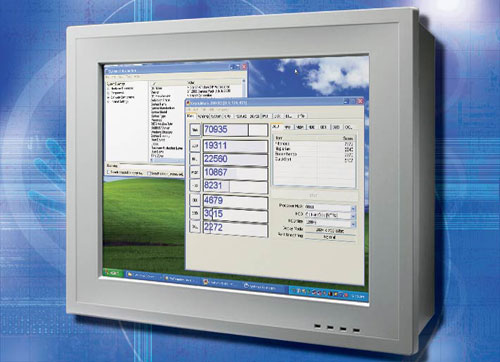
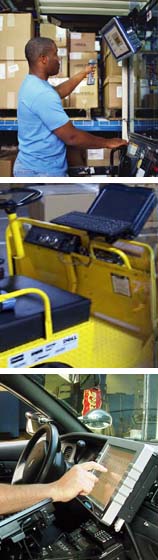
Panels could be defined as stationary slate or tablet computers. They are used in situations where computing power is needed in a vehicle or shop floor or laboratory, but there is no need for the computer to be carried around and no room to set up a conventional, non-rugged PC.
 Panel computers come in many shapes and sizes. Some are small and compact so they can easily be mounted in vehicles where space may be at a premium. Others are large enough to accommodate a 15, 17, 19-inch, or even larger, display in order to run sophisticated applications with multiple windows and a lot of content or graphics.
Most, but not all, panels have touch screens so that operators can use them via simple touch interfaces. Touch screen technologies employed range from simple capacitive systems to more complex technologies. Even capacitive multi-touch is now routinely available on industrial panels.
Panels may have different ruggedness and sealing requirements than rugged notebooks and slates.
For example, a panel mounted in a laboratory, clean-room, or clinical environment must not be as resistant to drops and vibration, but it must be resistant to frequent cleaning and desinfecting and have smooth, easy-to-clean surfaces where bacteria cannot accumulate.
A panel mounted in a truck, construction vehicle or forklift, on the other hand, must be able to withstand extreme, prolonged vibration as well as, at times, temperature extremes.
Displays may or may not have to be outdoor-viewable. Panel manufacturers often offer different dsplays for their products, depending on where a panel will be used. Power to drive strong backlights is not as much of an issue as most panels use vehicle power or grid power as opposed to batteries.
Panels generally run custom applications as opposed to standard Windows applications. Many can be loaded with a variety of operating systems, ranging from older versions of Windows to the latest ones, but also QNX, Linux, or embedded versions of an OS, such as Windows Embedded 8/8.1 or Windows 10 IoT Enterprise.
As stated above, battery power is rarely an issue with panels. Those mounted in racks in an indoor environment generally use standard or redundant power supplies. Those used in vehicles use vehicle power either directly or via DC-to-DC converters.
 Those seeking state-of-the-art technology in panels may be disappointed. Many panel applications simply do not need the latest high-speed processor, huge capacity disks or advanced graphics sub-systems.
The emphasis here is on getting the job done reliably, all the time, with a minimum of maintenance. Often, panels must be completely sealed, so low-voltage processors that do not require fans are preferred.
That said, several manufacturers do offer panels with a wide range of available processors, including performance-oriented options.
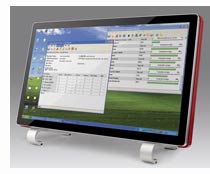
On the other hand, panels designed for point-of-sale and point-of-service applications can be sleek and elegant, and employ the latest interface technologies, such as capacitive multi touch.
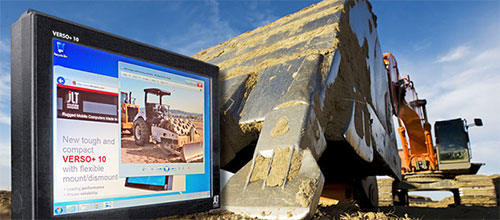
When using panels, mounting systems can be as important as the panel itsels. Good mounting systems, such as Havis or RAM Mount solutions, can make or break the utility of a panel computer.
Expandability, likewise, may be an issue. Very compact panels may be limited to the same expansions available to small mobile computers, such as expansion cards. Larger systems may be able to accommodate expansion via PCI-Express or standard PCI slots.
When selecting a panel computer, make extra sure you study all requirements in great detail, analyze the capabilities and performance of potential hardware, and make certain the manufacturer or dealer will be able to work with you in installing, customizing and servicing the systems, and be around to support you in the future. -- Conrad H. Blickenstorfer