|
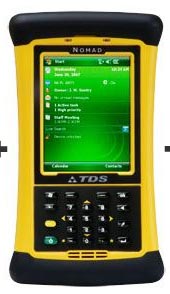
Nomad 800/900
Marvell PXA320-powered next gen rugged handheld
(by Conrad H. Blickenstorfer)
Note: On November 8th, 2010, Handheld announced the Nomad 900, which replaces the Nomad 800. However, the review remains valid as the changes between the Nomad 800 and 900 models are, while important, minor. The Nomad 900 uses Windows Mobile 6.1 instead of 6.0, supports high storage capacity SDHC cards instead of just SD cards (that max out at 2GB), has a higher resolution 5-megapixel camera, offers improved postprocessing GPS accuracy of 1-3 meters as opposed to 2-5 meters, and generally enhanced GPS, and has CISCO-certified WiFi. Some options have changed, but other than that, the Nomad is unchanged.
 Handheld is a North American supplier of rugged PDAs and handheld computers. It is part of Handheld Group, which was founded in 1997 and is one of Europe's leading suppliers of ruggedized handhelds for use in markets such as utility, military, logistics, forestry, transportation and field service.
The Nomad (made by TDS/Trimble) is a remarkable product in many ways. First of all, it may well be the first rugged handheld to use Marvell's awesome 806MHz next generation PXA320 processor. Marvell, of course, bought Intel's XScale application processor business in 2006, and so all fomer Intel PXA chips are now Marvell chips. The speedy new PXA320, the flagship of the PXA3xx series codenamed "Monahan," is able to scale from 806MHz to 624MHz to conserve power when full performance isn't needed. The chip is also more energy-eficient than the predecessor Bulverde processor, especially under heavy video and audio load. The PXA320 can run VGA resolution video at 30 frames per second, support a 5megapixel digital camera, video telephony, all at lower power consumption than the older XScale chips.Add to that a nice 128MB of RAM, up to a full gigabyte of nonvolatile Flash, Bluetooth 2.0 with Enhanced Data Rate, 801.11b/g WiFi, USB host and client ports and a full 480 x 640 VGA display and you have an impressive offering indeed.
But that is not all. The Nomad's creators designed the machine to be as flexible as possible, and that is accomplished via special caps and extended caps that can accommodate a variety of options. The Nomad can be ordered with an integrated 1D bar code laser scanner, an integrated 2-megapixel digital camera, GPS, and a variety of different keypad options. All in all, there are four different models.
But more on the Nomad: this is one tough machine. There aren't many IP67-capable handhelds. Yes, it survives underwater for half an hour (we filed-tested it underwater in scuba gear). Surviving 26 4-foot drops with state-of-the-art electronics and a VGA display is not easy. And being able to run the Nomad in a temperature range of -22 to 140 degree Fahrenheit, well, that covers just about anyplace.
|